The problem with registration data
If you sell into trucking, you have hit this wall. You want to know how big a carrier really is, and the easiest answer is the power unit and trailer counts a carrier reported to FMCSA. The trouble is that those numbers are self-reported, entered once at registration, and rarely updated after that.
The result is a fleet picture that drifts from reality. A carrier listed with 10 trucks might be running 35. A carrier listed with 150 might have parked a third of the fleet. For a rep working a list, that gap is the difference between a well-aimed account and an hour spent on the wrong one.
What we built
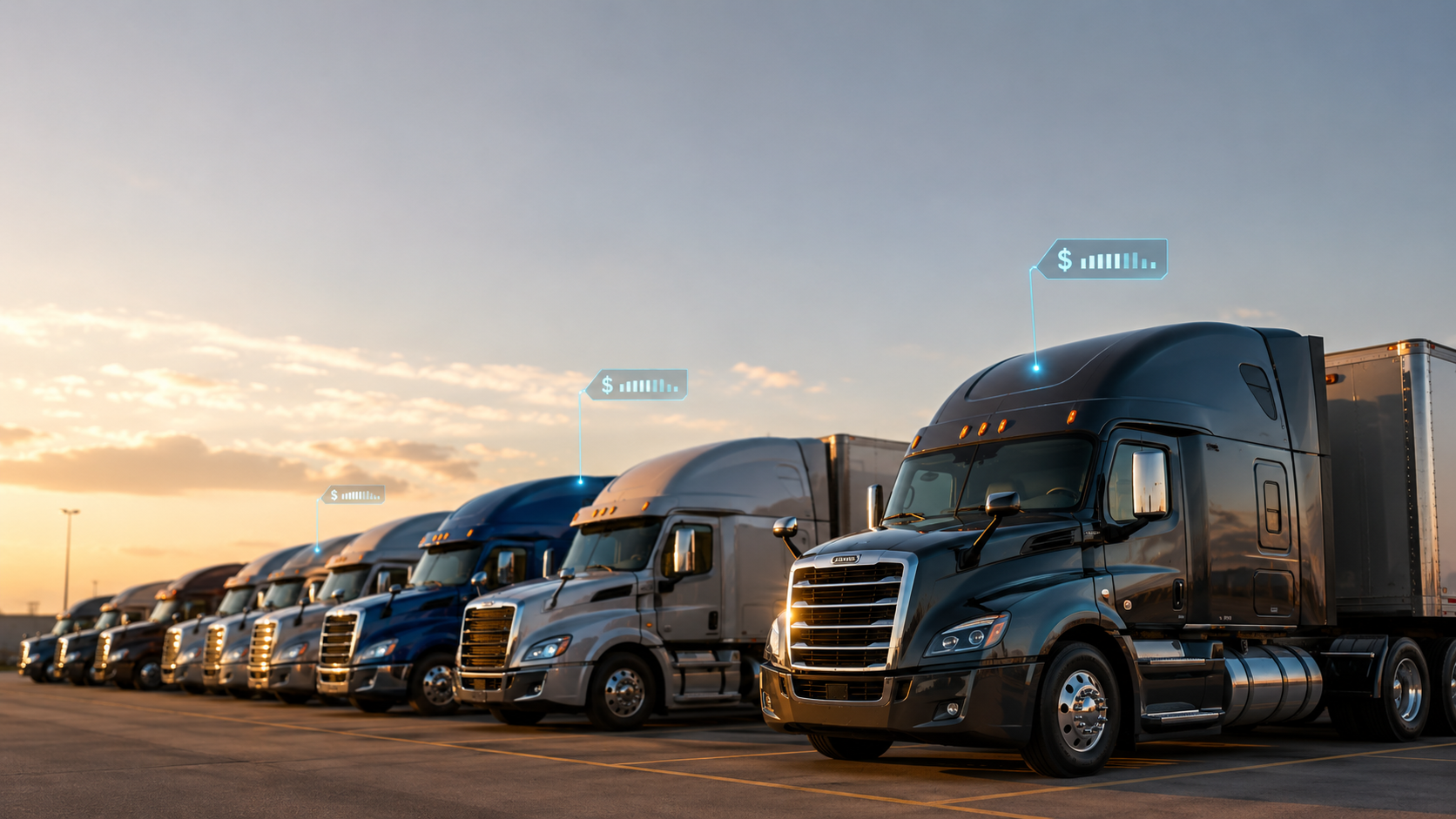
Estimated Fleet Value is a single dollar figure on every carrier profile. It answers a question your team asks constantly: how much equipment is this carrier really running, and what is it worth?
How it works
Instead of trusting the registration form, we build the estimate from equipment we can actually see.
Every roadside inspection in the FMCSA record captures the specific vehicle that was inspected. We take all of a carrier's equipment that has been inspected at least once in the last two years and treat that as the set of equipment the carrier is genuinely operating. The model then estimates value from that verified equipment.
The two-year window is the important part. It filters out equipment that has been sold, retired, or simply gone quiet, and keeps the estimate anchored to iron that has been observed on the road recently. If a truck has not turned up in an inspection in two years, we do not assume it is still earning miles for that carrier.
This is a deliberately conservative approach. We would rather hand you a number we can stand behind than inflate it with equipment we cannot verify. Think of Estimated Fleet Value as a grounded floor on a carrier's real operating scale, not an appraisal.
Why it matters
Estimated Fleet Value turns a vague sense of "big carrier" or "small carrier" into a concrete number you can compare and act on.
Insurance teams get a fast read on fleet scale and equipment exposure, which helps you decide which prospects are worth a full submission before you spend the time pulling one.
Equipment finance and leasing teams can size the iron a carrier already runs before the first conversation.
Fuel card and capacity teams get a quick proxy for account size, so reps can prioritize the carriers that actually move the number.
And for anyone running outbound, it is one more lever for segmentation. Point your team at the carriers whose real operating scale matches your ICP, and stop guessing from a stale registration field.
Where to find it
Estimated Fleet Value is live now on every carrier profile across the 2.7 million plus carriers in AlphaLoops. Open any carrier and you will see the fleet-level estimate alongside the rest of their equipment and safety picture.
You can also go a level deeper. Click into any individual piece of equipment and you will see an estimated value for that specific unit, so you can see how the fleet total breaks down truck by truck and trailer by trailer.
Have a question about how the estimate is built, or a use case you want us to support? We would love to hear it.